

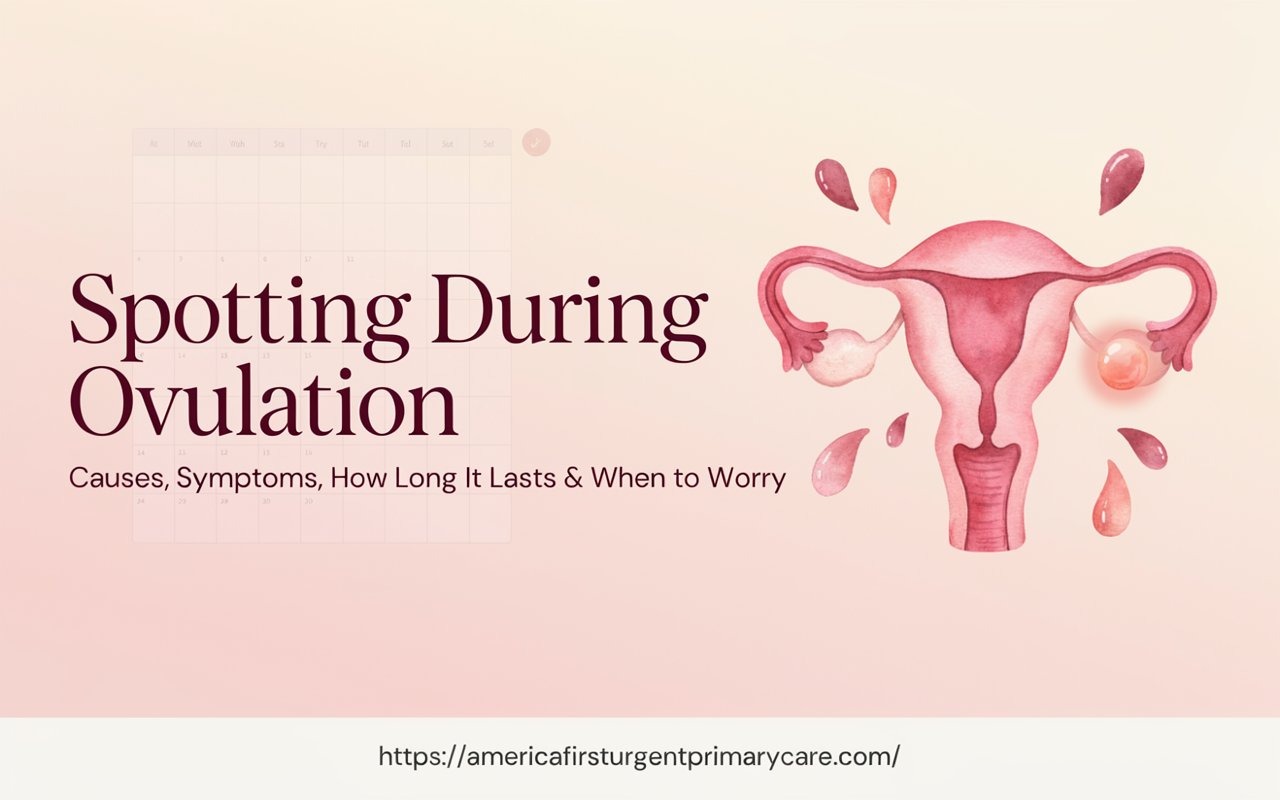
Sometimes you notice a little pink or brown spotting halfway through your menstrual cycle and become confused and worried. One question circulates in your mind, “Is this normal?”
Unexpected spotting can be alarming for many women, especially when it happens outside of their regular period. But light bleeding around the time of ovulation is actually common. In many cases, it’s completely harmless and results from hormonal changes in your body.
But it is important to understand the difference between normal ovulation spotting and abnormal vaginal bleeding to keep informed about your health. So let’s discuss why spotting during ovulation happens, how long it should last, and when it’s time to visit a healthcare provider.
What Is Ovulation?
Ovulation is the stage of your menstrual cycle when one of your ovaries releases a mature egg. This usually happens in the middle of your cycle. If you have a 30-day cycle, then it can happen about 15 days before your next period, although the exact timing changes depending on the length of your cycle.
Once the egg is released, it travels through the fallopian tube where it can be fertilized if sperm is present. If fertilization doesn’t occur, hormone levels gradually decline and eventually lead to your next menstrual period.
Different hormones control ovulation, including:
- Estrogen
- Luteinizing hormone (LH)
- Follicle-stimulating hormone (FSH)
- Progesterone
Changes in these hormones cause a mild spotting.
What Is Ovulation Spotting?
Ovulation spotting refers to very light vaginal bleeding that occurs around the middle of your menstrual cycle, typically when the ovary releases an egg.
Unlike a menstrual period, ovulation spotting is usually:
- Very light
- Short-lived
- Not heavy enough to require a regular pad
Many women never experience it while others notice it every month. Studies show that not all women experience ovulation but a very small percentage see spotting, which is completely normal.
Is Spotting During Ovulation Normal?
Yes.
In most healthy women, light spotting during ovulation is considered a normal physiological response to hormonal changes.
The bleeding usually occurs because:
- Estrogen briefly drops before ovulation.
- The follicle releasing the egg ruptures.
- Tiny blood vessels around the ovary can break.
This small amount of blood mixes with cervical mucus and creates pink or brown discharge.
As long as the spotting is:
- Light
- Short-lived
- Doesn’t come with severe pain
- Doesn’t continue for several days
It’s usually nothing to worry about.
What Does Ovulation Spotting Look Like?
Women describe ovulation spotting differently but it commonly appears as:
- Light pink spotting
- Brown discharge
- Rust-colored discharge
- Small streaks of blood
- Small spots on underwear
- Blood mixed with cervical mucus
Unlike a menstrual period, the bleeding is very light
Common Symptoms That May Accompany Ovulation Spotting
Many women notice additional signs of ovulation around the same time.
These include:
- Mild Pelvic Pain: One side of the lower abdomen feels a dull discomfort or a quick acute pain.
- Clear, Stretchy Cervical Mucus: A lot of women experience discharge that looks like raw egg whites. Sperm can move more freely due to this fertile mucus.
- Mild Cramping: For a few hours, some women get mild cramps.
- Increased Libido: During ovulation, hormonal changes frequently cause an increase in sexual desire.
- Breast Tenderness: Mild breast sensitivity can result from fluctuating hormone levels.
- Slight Bloating: Another typical ovulation symptom is temporary bloating.
How Long Does Ovulation Spotting Last?
Ovulation spotting is usually very brief.
Most women experience it for:
- A few hours
- One day
- Occasionally up to two days
But if bleeding continues more than two or three days, you should seek medical evaluation.
Can Ovulation Spotting Be a Sign of Pregnancy?
Not usually.
However, spotting is often confused with implantation bleeding, which happens after a fertilized egg attaches to the uterine lining. Ovulation spotting is caused by hormonal changes and usually light and short. But implantation bleeding happens about 6–12 days after ovulation, after conception has occurred and often near the time a period is expected.
If your period is late after spotting, you should take a pregnancy test.
Other Causes of Spotting Between Periods
Not all spotting is related to ovulation.
Other possible causes include:
- Pregnancy: Early pregnancy can cause implantation bleeding.
- Hormonal Imbalances: Conditions affecting estrogen or progesterone can trigger irregular bleeding.
- Polycystic Ovary Syndrome (PCOS): Irregular ovulation often leads to unpredictable spotting.
- Thyroid Disorders: Both overactive and underactive thyroid disease can affect menstrual cycles.
- Uterine Fibroids: These non-cancerous growths may cause abnormal bleeding.
- Uterine Polyps: Small tissue growths inside the uterus often lead to spotting.
- Cervical Polyps: These may bleed after intercourse or pelvic exams.
- Sexually Transmitted Infections (STIs): Certain infections may cause bleeding between periods along with discharge or pelvic discomfort.
- Pelvic Inflammatory Disease (PID): Untreated infections may lead to inflammation and abnormal bleeding.
- Endometriosis: This condition sometimes causes spotting outside regular periods.
- Perimenopause: Hormonal fluctuations before menopause frequently lead to irregular bleeding.
How Is Ovulation Spotting Treated?
If spotting is confirmed to be normal ovulation bleeding, treatment usually isn’t necessary. If another condition is identified, treatment depends on the underlying cause.
Possible treatments include:
- Antibiotics for infections
- Hormonal medications
- Birth control adjustments
- Treatment for thyroid disorders
- Management of fibroids or polyps
- Referral to a gynecologist when needed
When Should You Visit America First Urgent Care in Coppell, TX?
Light ovulation is normal but never ignore bleeding that’s unusual for you. If you’re experiencing persistent spotting, pelvic pain, abnormal vaginal discharge, or unexpected bleeding between periods, it is important to see a doctor without delay.
And if you are in Coppell, TX, or nearby areas, such as Irving, Lewisville, Grapevine, Carrollton, Valley Ranch, or Farmers Branch, then America First Urgent Care in Coppell is available for you, where you can get quick healthcare treatment. Our experienced medical team provides compassionate, same-day care for a wide range of non-emergency women’s health concerns.
Our clinic offers prompt assessments, pregnancy testing, urine testing, laboratory services, and referrals for additional imaging or specialist care when needed.
Whether your symptoms turn out to be a normal part of ovulation or something that requires further treatment, our urgent care services‘ goal is to help you feel informed, supported, and confident about your health.
