

Coppell summers are not easy to spend. From the humid weather in North Texas that reaches over 100°F, families like to spend more time outdoors at places like Andy Brown Park, Old Town, and local sports fields. During these outdoor visits, heat rash is one of the most common skin problems during the summer. At America First Urgent Care, we often see patients with heat rash from June through September. If you or your child has small, red, itchy bumps after spending time in the heat, it could be a heat rash. In most cases, it’s mild and goes away with simple care but sometimes it needs medical treatment.
Let’s discuss what heat rash is, how to tell it apart from other skin conditions, the best ways to treat it, and when it’s time to visit a doctor.
What Is Heat Rash?
Heat rash, also called miliaria, happens when sweat gets trapped under the skin because the sweat glands become blocked. Instead of leaving the skin as it normally does, the trapped sweat stays under the surface and causes small red bumps, itching, or a prickly feeling. Heat rash is usually mild but it’s still important to recognize and treat it, especially during hot weather.
In Coppell, TX, summer temperatures and high humidity create the perfect conditions for it. Babies, young children, and adults who spend a lot of time working, exercising, or playing outdoors are more likely to get heat rash because they sweat more and their skin cannot always release the sweat properly.
Types of Heat Rash
Not all heat rashes look the same. The type depends on how deeply the sweat gets trapped under the skin.
Miliaria crystallina
Considered as the mildest type of heat rash, it causes tiny, clear, water-filled blisters that look like small drops of sweat on the skin. It usually doesn’t itch or hurt and is most common in newborn babies.
Miliaria rubra (Prickly Heat)
Miliaria rubra is a very common type of heat rash in children and adults. It causes small red bumps that can itch, sting, or feel prickly, especially when you start sweating again. Most people are diagnosed with this heat rash and we treat it commonly at urgent care centers.
Miliaria profunda
It’s a very rare type of heat rash that develops deeper under the skin. It causes firm and skin-colored bumps. It is usually less itchy but can feel uncomfortable. It often happens after repeated episodes of heat rash and sometimes is accompanied by symptoms like dizziness or nausea if the body is unable to cool itself.
No matter the type, heat rash usually appears after spending time in hot, humid weather or sweating a lot.
Common Symptoms of Heat Rash
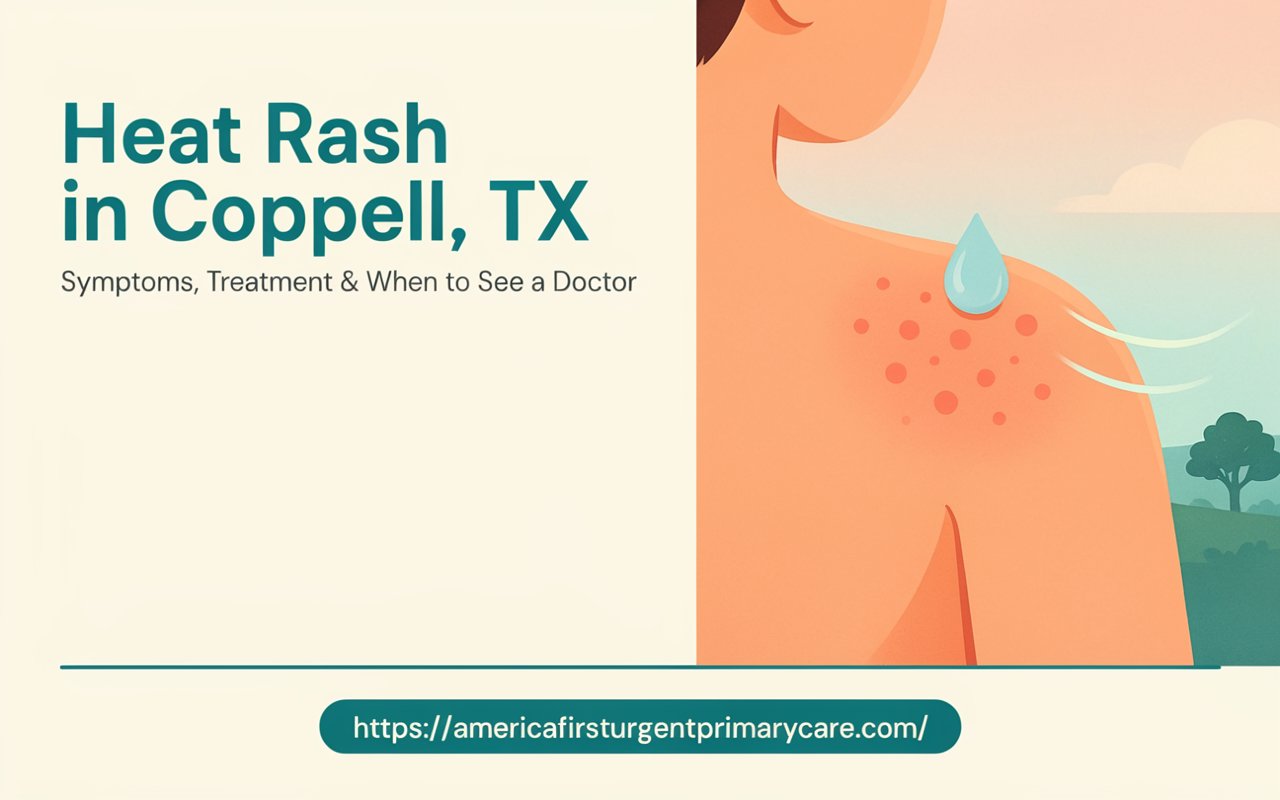
Heat rash usually appears in areas where sweat gets trapped or where skin rubs together. Common areas include the neck, chest, back, armpits, groin, elbow creases, and the diaper area in babies.
Common symptoms of heat rash include:
- Small red or skin-colored bumps that appear in groups
- Itching, stinging, or a prickly feeling, especially when you start sweating again
- Mild redness or slight swelling in the affected area
- Small blisters filled with clear fluid, and in some cases, pus if the rash becomes infected
On people with lighter skin, heat rash usually looks pink or red. On darker skin, the bumps appear gray, white, or skin-colored which makes them harder to notice on dark skin. That’s why it’s important to check your child’s skin carefully after spending time outside in hot weather.
What Causes Heat Rash?
Heat rash happens when sweat gets trapped under the skin because the sweat glands become blocked. This is more likely to happen in hot and humid weather or when your body can’t cool down properly.
Common causes of heat rash include:
- Hot and humid weather like the summers in Coppell and the Dallas-Fort Worth area
- Sweating a lot during outdoor activities, sports, exercise, yard work, or physical labor
- Tight or thick clothing that traps heat and sweat against the skin
- Overheating in babies, especially if they are dressed in too many layers or wrapped in blankets during warm weather
- Staying in bed for a long time which can cause heat rash on the back in people who are sick or unable to move much
- Using heavy creams or ointments that can block the skin’s pores and trap sweat
At-Home Treatment for Heat Rash
The good news is that most cases of heat rash go away on their own within a few days once your skin stays cool and dry. The best treatment is to avoid getting too hot and reduce sweating. Move to a cool or air-conditioned place as soon as possible and take a cool shower or bath to calm the skin. And try to air-dry your skin instead of rubbing it with a towel.
Then to make your skin stay cool, wear loose and lightweight clothing made from breathable fabrics like cotton. Avoid using heavy creams, oils, or ointments because they can block your pores and make the rash worse. If the rash is itchy, then calamine lotion can help relieve the discomfort. Try not to scratch the rash, as this can damage the skin and lead to an infection.
Then the most important thing is to drink plenty of water and avoid outdoor activities during the hottest part of the day. For babies, keep the room cool, dress them in light clothing, and avoid wrapping them in too many blankets to help prevent heat rash.
Heat Rash or Something Else?
Most of the time, heat rash is misunderstood because it looks like other conditions. That’s why sometimes it becomes difficult to tell the difference. But it is important to know each skin-related issue so it does not get more severe.
Heat Rash vs. Eczema
Heat rash usually appears suddenly after spending time in hot weather or sweating a lot. It often goes away once your skin cools down and stays dry. But Eczema is a long-term skin condition that comes up again and again. It is often linked to allergies, sensitive skin, or family history.
Heat Rash vs. Allergic Rash
An allergic rash is usually caused by something you’ve come into contact with such as certain foods, medications, plants, detergents, or cosmetics. Heat rash is different because it develops when your body overheats and sweat becomes trapped under the skin.
Heat Rash vs. Poison Ivy
Poison ivy usually causes severe itching, large blisters, and a rash that appears in lines where the plant touched the skin. Heat rash is more likely to appear in areas where sweat collects such as the neck, chest, back, armpits, or groin.
Heat Rash vs. Chickenpox
With chickenpox, you feel fever, tiredness, and itchy blisters that spread across the body. The blisters appear in different stages of healing. Heat rash usually stays in one area and does not cause fever or widespread blisters.
Heat Rash vs. Bacterial Skin Infection
A bacterial skin infection just looks like a rash but it often becomes more painful over time. The skin becomes warm, swollen, red, or tender, and you can notice pus or develop a fever. These symptoms should be checked by a healthcare provider as soon as possible.
When to See a Doctor for Heat Rash
Most cases of heat rash can be treated at home and do not require a visit to a doctor. However, you should visit America First Urgent Care in Coppell if the rash does not improve after a few days, gets worse, or becomes more red, swollen, warm, or painful. If you notice pus, develop a fever, or have swollen lymph nodes near the rash, you should seek medical care because these can be signs of an infection.
You should also see a healthcare provider if you or your child feels dizzy, nauseous, has a headache, or feels unusually tired along with the rash as these could be signs of a more serious heat-related illness. If you’re not sure whether it’s heat rash or another skin condition such as an allergic reaction or a skin infection, a medical exam can help identify the cause and ensure you receive the right treatment.
How America First Urgent Care Can Help
If your heat rash is not getting better with home care or you notice any warning signs, visit America First Urgent Care in Coppell for quick medical care. Our walk-in clinic provides same-day treatment without the long wait times of an emergency room or the need to schedule an appointment in advance. Our healthcare providers can examine the rash, confirm whether it is heat rash or another skin condition, check for signs of infection, and recommend the right treatment. Depending on your condition, we recommend home care advice, over-the-counter treatments, or prescription medication if needed. Whether you live in Lewisville, Carrollton, Irving, Grapevine, or Flower Mound, we’re here to help you and your family get back to enjoying the summer as quickly as possible.
